
In today’s industrial weighing, weigh modules are key. They turn tanks, hoppers, silos, and platforms into precise and dependable weighing systems. These assemblies, whether called a single weigh module or a full set, combine a load cell with mounting hardware. This design makes installation easier and boosts structural stability. Engineers in many industries now choose pre-engineered weighing modules over bare load cells. These modules simplify design, reduce installation errors, and provide reliable performance in real-world settings.
Structural Design and Mechanical Integration
A typical weigh module is more than just a sensor. It combines the load cell with special mechanical parts. These parts soak up side forces, thermal expansion, vibrations, and shocks. In tough places like chemical plants, food processing facilities, and cement factories, tanks and vessels are hardly ever still. They expand with temperature changes and shift slightly during filling or discharge. Properly designed weighing modules allow controlled movement while maintaining vertical load accuracy. This protects the load cell and ensures long-term measurement stability.
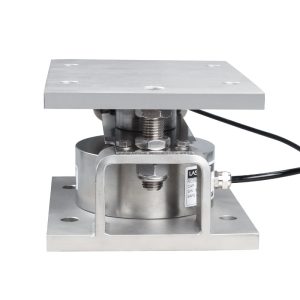
GW Heavy-Duty Column Weighing Module for Tank & Silo Systems
Applications of Compression Weigh Modules
For applications focused on vertical force measurement, compression weigh modules are widely used. These modules are engineered to measure downward force from tanks, silos, or reactors resting on support legs. A compression load cell is set in a strong mounting assembly. This assembly has top and bottom plates, anti-lift protection, and horizontal restraints. Compression weigh modules work well for medium to high-capacity systems. They can handle weights from hundreds of kilograms up to hundreds of tons. They are often used in batching systems, mixing tanks, grain silos, and bulk storage facilities. These places need stability and durability.
Complete Solutions with Weigh Module Kits
When customers require a ready-to-install solution, they often select a weigh module kit. A weigh module kit typically includes the load cell, mounting hardware, anti-vibration components, and sometimes a junction box for signal summing. Ordering a weigh module kit simplifies sourcing for OEM manufacturers and system integrators. It also ensures that mechanical and electrical components work well together. Users get a standardized package that includes mounts and sensors. This design ensures reliable performance and makes installation easier.
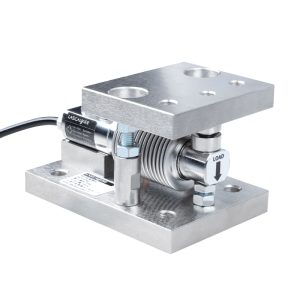
M23 Cantilever Beam Weighing Module for Tanks and Silos
Importance of Weigh Modules and Mounts
In big installations, buyers often want weigh modules and mounts together. Standalone load cells exist, but experienced engineers know that the mounting design impacts both accuracy and lifespan. Improper mounting can introduce side loads or uneven stress, leading to measurement errors. Customers achieve mechanical compatibility and better load distribution by sourcing weigh modules and mounts together. This method works well in large outdoor silos or industrial tanks. They often face vibration and environmental stress.
Benefits of Wholesale Weighing Module Supply
For distributors and project contractors, buying wholesale weighing modules is key. It helps keep costs down and ensures standardization. Wholesale weighing modules help businesses keep prices competitive. They ensure consistent technical specs across all installations. In wholesale markets, durability, standardized dimensions, and reliable sealing are key decision factors. Industrial users need weighing modules to work well in dusty, humid, or corrosive settings. So, quality assurance is crucial.
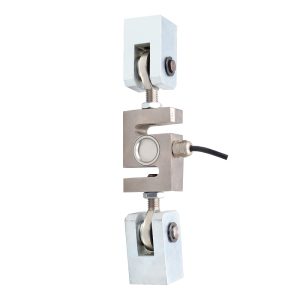
101M S-Type Load Cell for Hoisting and Lifting Weighing
Simplified Installation and Commissioning
One major advantage of using weigh modules instead of bare load cells is installation efficiency. Traditional load cell mounting requires precise machining and alignment. Weighing modules, however, are designed to accommodate minor structural variations and simplify commissioning. Many designs include self-centering mechanisms that automatically align under load. This reduces installation time and improves overall accuracy. Weigh modules offer an easy way to upgrade old buildings into working weighing systems for retrofit projects.
Safety and Structural Protection
Safety is a critical consideration in industrial weighing systems. Tanks and silos often store valuable or hazardous materials. Good weigh modules have anti-lift protection and lateral restraint. These features stop structural instability. Compression weigh modules often have lift-off prevention bolts and horizontal stops. These features help secure the vessel during maintenance and seismic events. These protective features ensure both equipment reliability and operational safety.
Accuracy and Environmental Adaptability
Weighing modules must maintain accuracy under real operating conditions. External factors, such as wind loads, pipe connections, and mechanical agitation, can cause side forces. Advanced weigh module designs keep the load cell safe from disturbances. They often use rocker pin or pendulum-style mechanisms. Material choice affects performance. Stainless steel weigh modules are common in food and pharma. Alloy steel versions are popular in heavy industry. Choosing the right weigh module ensures long-term measurement consistency.
Integration with Modern Control Systems
As industrial automation grows, weigh modules often link to digital transmitters, weighing indicators, and PLC systems. Modern weighing modules link to industrial networks. They enable real-time monitoring, automate batching, and help with inventory control. In these systems, mechanical stability directly supports digital accuracy. Reliable weigh modules form the foundation of precise data collection and process optimization.
Reliable Weighing for Industrial Efficiency
Customers might need one weigh module. They may also need several modules or heavy-duty compression weigh modules for tanks. They might also want wholesale weighing modules for distribution. The goal is always the same: stable, accurate, and durable weight measurement. Weighing modules mix strong mechanical engineering with precise sensing tech. This turns regular industrial structures into smart weighing systems. Choosing the right weigh module kit or compression weigh module isn’t just about buying. It’s a long-term investment in efficiency, safety, and reliable processes.