
In HDPE pipe production, the key factors are extrusion speed, die design, and cooling systems. In factory operations, especially in Southeast Asia, success depends on one key thing. It’s how well we weigh and control materials.
The environment itself already creates challenges. High humidity and constant heat, plus poor plant management, stress raw material handling. HDPE pellets are cheap per kilogram. But if you run continuously, small inefficiencies can lead to big losses.
Let’s start with a very real scenario many factories don’t like to talk about: the material silo.
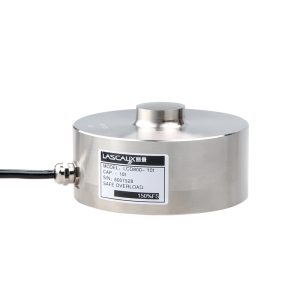 LCD800 Low-Profile Pancake-Type Compression Load Cell
Scenario 1: Silo Management – Avoiding Costly Shutdowns
In many HDPE pipe plants, indoor storage silos holding 10 to 30 tons of material are common. On paper, it looks simple—store the pellets, feed the line, keep production moving. In real life, especially in humid places like Indonesia, Vietnam, or Thailand, things often don’t go as planned.
Moisture, bridging, and uneven material flow can lead to inaccurate level estimation. Operators believe there’s still enough material. However, the flow has become unstable. The extruder runs out of material without warning.
A “break in feeding” might only last a few minutes, but the consequences are not small:
-
The extruder has to stop and restart
-
Heating cycles consume additional electricity
-
Partially processed material becomes scrap
-
Product quality becomes inconsistent after restart
In some plants, a single incident like this can cost hundreds or even thousands of dollars. Over a year, it adds up fast.
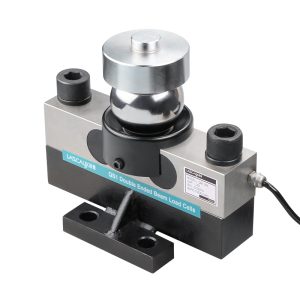
QS1 Double Shear Beam Load Cell for Truck and Rail Scales
This is where compression load cell weighing modules (10t–30t capacity) become essential—not optional.
Putting weighing modules under the silo helps operators. They no longer need to guess or visually inspect. They get real-time, accurate weight data of the entire material inventory. More importantly, they can monitor actual consumption trends, not just static levels.
A well-designed compression weighing module offers:
-
Stable performance under heavy loads
-
Resistance to humidity and temperature variations
-
Mechanical self-alignment to handle slight installation errors
-
Long-term reliability with minimal recalibration
In Southeast Asia, the tough environment makes stainless steel or well-sealed alloy steel modules a better choice. They handle condensation and corrosion much better than standard designs.
With accurate silo weighing, factories can:
-
Prevent unexpected material shortages
-
Plan replenishment more precisely
-
Maintain continuous extrusion without interruption
It’s not just about measurement—it’s about keeping the entire production rhythm stable.
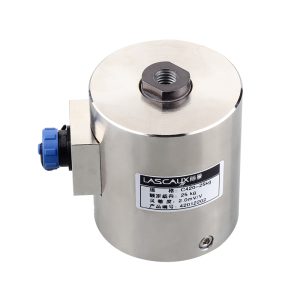
LCC420 Column Force Sensor for Force Control and Measurement
Scenario 2: Loss-in-Weight Feeding – Controlling Every Gram
Silo weighing helps prevent big disruptions. Loss-in-weight feeding stops small, ongoing losses.
On top of the extruder, the loss-in-weight hopper controls how much HDPE material is fed into the process. This directly affects pipe wall thickness and weight per meter—two parameters that define product quality and cost.
Here’s the problem: many factories still accept small deviations as “normal.”
But let’s do a simple calculation.
If each meter of pipe uses just 1% more HDPE than necessary, it may not be noticeable in daily production. Over a year, a medium to large factory can waste tens or even hundreds of thousands of dollars on materials.
And this is pure loss—no added value, no improvement in quality.
High-precision shear beam load cells and bellows-type weighing modules (100kg–500kg range) are key. They are vital for loss-in-weight systems.
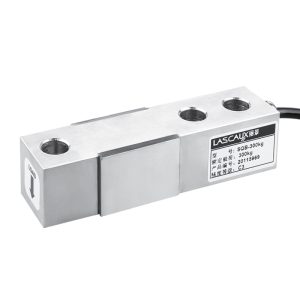
SQB Alloy Steel Shear Beam Load Cell for Tank & Floor Scales
These sensors detect small changes in hopper weight. They feed this data into the control system. Based on this, the system adjusts the feeding rate in real time, ensuring that the extrusion process remains consistent.
What makes a good weighing solution in this application?
First, accuracy under dynamic conditions. The hopper loses weight as material is added. So, the load cell needs to stay stable, even with constant changes.
Second, fast response time. Any delay in measurement leads to overfeeding or underfeeding.
Third, resistance to vibration. Extruders are not gentle machines. Mechanical vibration can have a major effect on low-quality sensors.
Fourth, environmental durability. Again, heat and humidity in Southeast Asia are not forgiving. Sealed, well-protected load cells make a big difference in long-term performance.
When implemented correctly, these weighing modules allow the system to:
-
Maintain precise control of material consumption
-
Keep pipe weight within target range (“not under, not over”)
-
Reduce raw material waste significantly
-
Improve overall product consistency
Over time, the savings from material optimization alone can far exceed the initial investment in the weighing system.
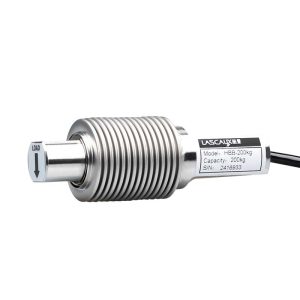
HBB Stainless Steel Bellows Load Cell with Welded Seal
Thinking Beyond Hardware
It’s worth mentioning that choosing the right load cell or weighing module is only part of the solution. Installation, calibration, and system integration all matter.
For silo applications, improper mounting can introduce side forces that affect accuracy. For loss-in-weight systems, poor mechanical design can amplify vibration or delay response.
Many skilled engineers choose integrated weighing modules. They prefer them to standalone load cells. A well-designed module already considers:
-
Load alignment
-
Anti-lift protection
-
Easy installation
-
Consistent performance over time
It reduces risk during setup and ensures that the system works as expected from day one.
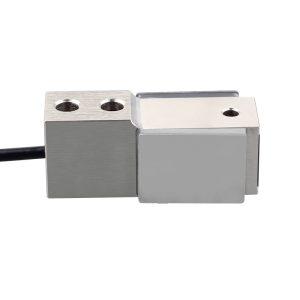
MBB Low-Profile Miniature Bending Beam Load Cell for Bench Scales
From a purely technical standpoint, weighing modules are merely components. From a factory management viewpoint, they help control costs and reduce uncertainty.
In HDPE pipe production, margins are often tighter than they appear. Energy, raw materials, and downtime all eat into profits. The difference between a well-controlled process and a loosely managed one isn’t always obvious at first. But over months and years, it becomes clear.
Accurate weighing at the silo level (10t–30t compression modules) keeps operations predictable. At the process level (100kg–500kg high-precision modules), it makes operations efficient too.
It helps ensure that:
-
Production runs without unnecessary interruptions
-
Material usage is optimized
-
Product quality remains consistent
-
Costs stay under control
In places like Southeast Asia, environmental factors make things more complex. So, having reliable weighing systems isn’t just a technical upgrade; it’s a must.
In the end, it’s not about using more advanced equipment for the sake of it. It’s about solving real problems on the factory floor—without drawing attention, with regularity, and with a focus on results.