
In many industrial settings, managing cable tension is key. It ensures safety, boosts efficiency, and improves product quality. Accurate tension monitoring is vital. It matters for cranes, elevators, wire processing lines, and material handling equipment. It prevents mechanical failure, boosts stability, and keeps systems safe. Picking a reliable cable tension sensor manufacturer is key. Companies need accurate force measurement to succeed.
Cable tension sensors check how tight wires, cables, ropes, and strips are while they work. Tension sensors differ from traditional weighing sensors. While traditional sensors are for static use, tension sensors operate in dynamic conditions. They work where cables move constantly. They must be durable and responsive. Also, they need to provide stable measurements in tough conditions.
A professional manufacturer cares about sensor accuracy. They also focus on durability, easy installation, and flexibility for various industrial uses.
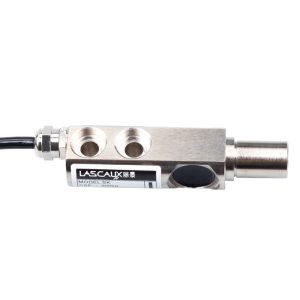
SK Cantilever Online Measuring Tension Sensor
Understanding Cable Tension Sensors
A cable tension sensor is a device used to measure the pulling force applied to a cable or wire rope. The sensor changes mechanical force into an electrical signal. Control systems or indicators can then monitor this signal.
In many industries, maintaining proper tension is essential. If the tension is too low, cables may slip, sag, or lose control. If it is too high, it can lead to equipment damage or cable breakage. Operators can install tension sensors to monitor the force in real time. This way, they can make adjustments as needed.
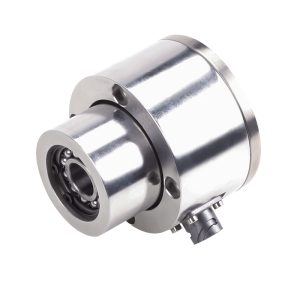
HLT Tension Sensor Online Precise Measurement Tension Detector
Cable tension sensors are widely used in:
-
Wire and cable production lines
-
Crane and hoisting equipment
-
Elevator systems
-
Mining and heavy machinery
-
Steel processing lines
-
Textile and paper industries
-
Material handling systems
Different applications need different sensor designs. That’s why manufacturers offer many tension measurement solutions.
RTM Tension Load Cell for Wire Rope Applications
The RTM tension load cell measures the tension in wire ropes. It’s often used in lifting and mechanical systems. The structure lets the rope go through the sensor. Meanwhile, the internal strain element measures the force applied.
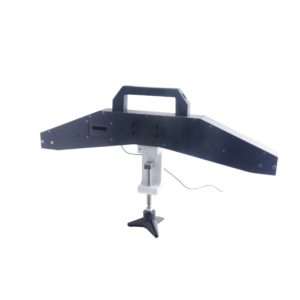
RTM Tension Load Cell for Wire Rope and Cable Monitoring
This design makes the RTM sensor particularly suitable for applications such as:
-
Crane wire rope monitoring
-
Hoisting equipment
-
Offshore lifting systems
-
Safety load monitoring
Manufacturers make RTM tension sensors with strong alloy steel. This design helps them handle heavy loads and vibrations. They also resist mechanical stress well. Their compact design allows easy fitting into existing cable systems without major changes.
COLT Tension Load Cell for Wire Rope Measurement
Another solution is the COLT tension load cell. It’s made for monitoring wire rope tension in industrial machines.
The COLT sensor has a tough design. It can handle constant load changes. It gives steady output signals. You can connect these to digital indicators, PLC systems, or monitoring software.
Typical applications include:
-
Overhead cranes
-
Port lifting equipment
-
Cable-driven machinery
-
Structural monitoring systems
One benefit of the COLT design is that it stays accurate, even with changing loads. This makes it highly valuable in environments where loads change frequently.
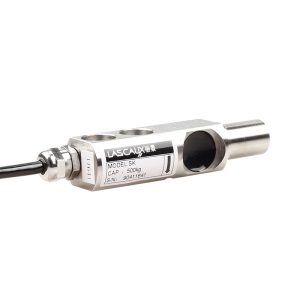
SK Cantilever Online Measuring Tension Sensor
For continuous production lines, online tension monitoring is essential. The SK cantilever tension sensor is widely used for this purpose.
This sensor measures tension. It works with moving materials like wires, strips, cables, and films. The cantilever structure holds guide rollers. These rollers sense tension changes as the material moves over them.
Industries that commonly use SK sensors include:
-
Metal strip processing
-
Cable manufacturing
-
Textile production
-
Paper converting lines
The SK sensor measures tension during operation. This lets manufacturers monitor it in real time. They can then adjust machine settings automatically, ensuring consistent product quality.
TK Three-Roller Online Precise Measurement Tension Sensor
The TK three-roller tension sensor is an excellent choice for high measurement stability and accuracy.
This sensor has three rollers. The material goes through each guide roller. The middle roller is connected to a force measuring element that detects tension changes.
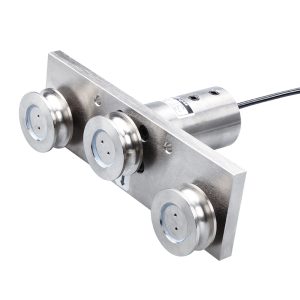
TK Three-roller online precise measurement tension sensor tension detector
The advantages of the TK design include:
-
High measurement precision
-
Stable tension detection
-
Reduced measurement error caused by vibration
-
Suitable for high-speed production lines
Three-roller tension sensors find frequent application in various industries, including:
-
Steel strip production
-
Aluminum foil processing
-
Wire drawing lines
-
Packaging film manufacturing
The sensor measures force from many contact points. This gives it more stable readings than single-roller designs.
TR Three-Roller Wire and Strip Tension Measuring Instrument
The TR three-roller tension sensor is a top pick for measuring tension in wire and strip. Like the TK design, it has three rollers that ensure accurate force goes to the sensing element.
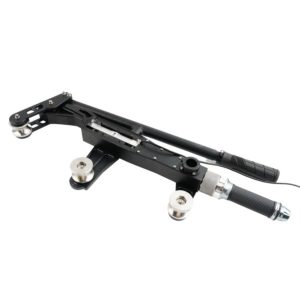
This type of sensor is ideal for:
-
Wire processing equipment
-
Strip tension control systems
-
Cable production machinery
-
Rolling mills
The TR sensor helps operators maintain precise tension levels during continuous production. This improves product consistency and reduces material waste.
Another advantage is its ability to integrate easily with automatic control systems. The sensor can change the machine’s speed or brakes automatically. It does this when connected to controllers, so no manual input is needed. This helps maintain tension in the desired range.
RL Cable Tension Sensor for Large Tonnage Applications
Some industrial applications require very high load capacity. The RL cable tension sensor is made for heavy tonnage loads.
This sensor is typically used in heavy-duty industries such as:
-
Mining equipment
-
Large cranes
-
Cable-stayed bridge monitoring
-
Offshore lifting systems
-
Heavy structural testing
The RL sensor has a strong design. You can customize it for various load ranges. This makes it a great fit for specialized engineering projects.
Large-capacity tension sensors need to stay accurate under heavy loads. The RL design aims to offer strength and long-term reliability.
Choosing the Right Cable Tension Sensor Manufacturer
Selecting the right cable tension sensor manufacturer is not only about price. You should consider several factors when choosing a supplier:
1. Technical experience
Manufacturers with experience in load cell technology are more reliable. They also provide better support.
2. Product range
A good manufacturer provides several sensor types. These include wire rope sensors, roller tension sensors, and large-capacity cable sensors. This ensures that we can meet different application requirements.
3. Customization capability
Many industrial systems need custom sensors. These sensors have specific load ranges, installation structures, or signal outputs.
4. Quality and reliability
High-quality materials, strict calibration, and long-lasting durability are key for industrial measurement tools.
5. Technical support
Reliable manufacturers provide installation guidance, calibration services, and technical assistance when needed.
The Future of Tension Measurement Technology
Industrial automation is growing. Tension monitoring systems are now connecting more with digital control systems. Modern tension sensors connect to PLCs, industrial networks, and monitoring software. This lets operators track system performance in real time.
In smart factories, tension sensors are crucial for keeping production quality steady. Collecting accurate force data helps machines adjust speed, braking, or feed rates. This keeps tension stable.
This trend is driving the demand for precise, durable, and smart cable tension sensors across many industries.
Measuring cable tension is crucial. It ensures safe and smooth operation in many industrial systems. Choosing the right sensor solution is key. It helps monitor wire rope loads in cranes and control tension in fast production lines. This choice greatly impacts performance.
Using a good cable tension sensor from a trusted manufacturer helps businesses. They can boost safety, enhance product quality, and streamline production processes.