
In modern industrial production, accurate weighing is no longer just a technical requirement. It directly affects material control, product consistency, production efficiency, and operating costs. Whether in chemical processing, food manufacturing, pharmaceuticals, plastics, coatings, cement, or liquid storage applications, companies need a reliable way to monitor the weight of tanks, hoppers, reactors, and silos in real time.
This is where a weigh module becomes an important part of the weighing system.
A weigh module is designed to convert ordinary storage or processing vessels into accurate weighing systems without changing the original structure of the equipment. Compared with traditional platform scales, weigh modules provide a more flexible, stable, and space-saving solution for industrial weighing.
For industries handling powders, liquids, granules, chemicals, or bulk materials, tank weighing modules have become one of the most practical solutions for process automation.
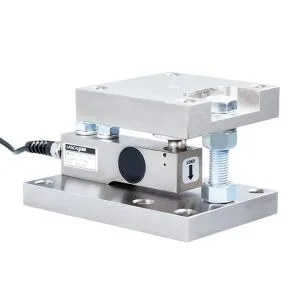
What Is a Weigh Module?
A weigh module is a complete weighing assembly that combines a load cell, mounting hardware, and protection components into one integrated system. It is installed under tanks, silos, hoppers, mixers, reactors, or storage vessels to measure weight accurately during filling, batching, mixing, or discharge.
Unlike standard load cells that require additional structural design, a weigh module is already engineered for industrial installation conditions. It helps reduce installation time while improving long-term stability.
Most industrial weigh modules are designed to handle:
Static tank weighing
Dynamic mixing processes
Liquid batching systems
Silo inventory monitoring
Hopper feeding control
Reactor vessel weighing
Automated dosing systems
Bulk material storage measurement
Depending on the application environment, weigh modules can be manufactured using alloy steel or stainless steel materials, with different protection levels such as IP65, IP67, or IP68.
For outdoor silos, chemical tanks, or washdown environments, stainless steel weigh modules are often preferred because of their corrosion resistance and durability.
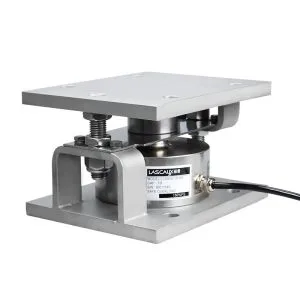
Why Tank Weighing Requires Specialized Weigh Modules
Tank weighing is very different from ordinary floor scale applications.
Industrial tanks are usually exposed to vibration, thermal expansion, wind load, pipe tension, and uneven loading conditions. In many factories, tanks are connected with pipelines, agitators, pumps, and motors. These external forces can affect weighing accuracy if the weighing system is not properly designed.
A professional tank weigh module is developed specifically to solve these challenges.
Modern weigh modules include:
Anti-lift protection
Side force resistance
Horizontal movement limitation
Self-aligning load structures
Shock protection design
Stable load transfer mechanisms
These features help maintain weighing accuracy even in demanding industrial environments.
For example, in liquid chemical storage tanks, the vessel may slightly expand or shift during temperature changes. A properly designed weigh module allows limited movement while still maintaining stable measurement.
Similarly, in mixing tanks with agitators, vibration can affect ordinary load cells. Industrial weighing modules help reduce vibration influence and improve weighing consistency.
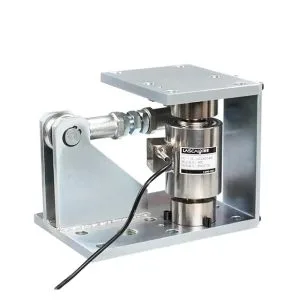
Common Applications of Weigh Modules
1. Silo Weighing Systems
Silos are widely used for storing cement, grain, flour, plastic pellets, lime powder, minerals, and other bulk materials.
Traditional inventory estimation methods often rely on manual checking or level sensors, which may not provide accurate weight data. A weigh module installed under the silo can continuously monitor material weight in real time.
This helps factories:
Prevent material shortages
Improve inventory management
Reduce production interruptions
Control raw material consumption
Improve batching precision
Large silo weighing systems usually use multiple compression weigh modules installed at support legs.
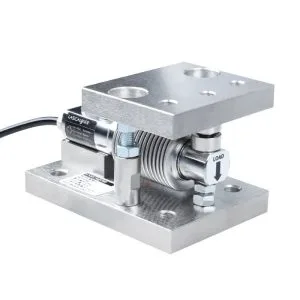
2. Hopper and Batching Systems
In automated production lines, hoppers are used for temporary storage and controlled feeding.
A hopper weigh module system allows precise control of incoming and outgoing materials.
This is especially important in:
Food ingredient batching
Chemical dosing
Plastic compounding
Feed processing
Pharmaceutical production
Accurate weighing ensures product consistency and reduces raw material waste.
For automated batching systems, fast response and repeatable accuracy are often more important than ultra-high precision.
Industrial weigh modules are designed to deliver stable repeatability under continuous operation.
3. Liquid Tank Weighing
Flow meters are commonly used for liquid measurement, but they may become less accurate when fluid density changes.
A tank weighing module directly measures actual mass instead of estimated volume.
This makes it suitable for:
Paint production
Adhesive manufacturing
Chemical mixing
Beverage processing
Oil and lubricant storage
Water treatment systems
In many liquid applications, stainless steel weigh modules are preferred because they resist moisture and chemical corrosion.
4. Reactor Vessel Weighing
Chemical and pharmaceutical reactors require precise ingredient control.
During the production process, operators must monitor how much material enters and exits the reactor.
A weigh module system provides continuous weight feedback for process control.
This improves:
Formula consistency
Production traceability
Automation accuracy
Material utilization
Product quality stability
For reactors with agitators or heating systems, anti-vibration weigh modules are often recommended.
Advantages of Using Weigh Modules
Flexible Installation
One major advantage of weigh modules is installation flexibility.
Factories can upgrade existing tanks or silos into weighing systems without replacing the vessel itself.
This reduces project costs and shortens installation time.
Many industrial facilities choose weigh modules because they can integrate with existing production equipment.
High Stability Under Industrial Conditions
Industrial environments are rarely perfect.
There may be vibration, shock loading, dust, humidity, temperature changes, or mechanical movement.
A professionally designed weigh module helps maintain stable weighing performance under these conditions.
This is particularly important for:
Outdoor silo systems
Mixing tanks
Continuous feeding systems
Heavy-capacity storage vessels
Improved Process Automation
Modern factories increasingly rely on automation.
Weigh modules can connect with:
PLC systems
Weight transmitters
Industrial controllers
SCADA systems
HMI interfaces
Cloud monitoring platforms
This allows automatic batching, material tracking, alarm management, and production data recording.
For manufacturers focused on Industry 4.0 upgrades, weigh modules are an important part of intelligent production systems.
Better Inventory Control
Inventory management becomes easier when tanks and silos provide real-time weight data.
Operators can monitor material consumption more accurately instead of relying on manual estimates.
This helps reduce:
Overstocking
Unexpected shortages
Material waste
Production delays
For high-value raw materials, accurate weighing can significantly improve cost control.
How to Choose the Right Weigh Module
Selecting the correct weigh module depends on several factors.
Capacity Requirements
The first step is determining the total vessel weight, including:
Tank dead weight
Maximum material load
Additional process load
Safety margin
The weigh module capacity should always include sufficient overload protection.
Material and Environmental Conditions
For dry indoor environments, alloy steel weigh modules are often economical and reliable.
For corrosive or wet environments, stainless steel weigh modules are more suitable.
Industries such as food, pharmaceutical, and chemical processing often prefer stainless steel because of hygiene and corrosion resistance.
Accuracy Requirements
Different applications require different accuracy levels.
For example:
Inventory monitoring may only require basic accuracy
Chemical batching requires higher repeatability
Pharmaceutical applications may require very precise control
Choosing the correct load cell sensitivity and weighing indicator is important.
Installation Structure
Tank structure affects weigh module selection.
Factors include:
Number of support legs
Tank shape
Center of gravity
Pipe connections
Vibration conditions
Outdoor wind exposure
Proper installation is critical for long-term weighing stability.
Installation Considerations for Tank Weighing Modules
Even high-quality weigh modules can perform poorly if installation is incorrect.
Several important details should be considered during installation.
Avoid Excessive Pipe Stress
Rigid pipelines connected to tanks can transfer force into the weighing system.
Flexible pipe connections are recommended to reduce external interference.
Ensure Uniform Load Distribution
The tank structure should distribute weight evenly across all weigh modules.
Uneven support conditions may reduce accuracy or damage the load cells.
Consider Thermal Expansion
Large tanks may expand or contract during temperature changes.
Proper mounting design allows controlled movement while protecting weighing accuracy.
Use Proper Junction Boxes and Indicators
Signal quality is important in industrial weighing systems.
A stable junction box and reliable weighing controller help improve long-term performance.
For large installations, surge protection
Why More Industries Are Switching to Weigh Modules
As factories move toward automation and digital process control, traditional manual measurement methods are becoming less practical.
Companies want:
Real-time material data
Stable production control
Reduced labor dependence
Better traceability
Improved efficiency
Lower operational costs
Weigh modules provide a practical way to achieve these goals without completely redesigning existing equipment.
Whether for small mixing tanks or large industrial silos, a properly designed weigh module