
Force measurement is commonly used in grain processing equipment for batching, dispensing, hopper weighing, and packaging.
In compact grain equipment, installation space is often limited, so the sensor may need to fit directly into the machine structure. This is where a thru hole load cell is commonly used.
Compared with dairy or meat production, grain handling usually involves fewer washdown and hygienic design constraints. Conventional industrial load cell solutions are often a practical fit for dry food applications, provided dust protection is properly considered.
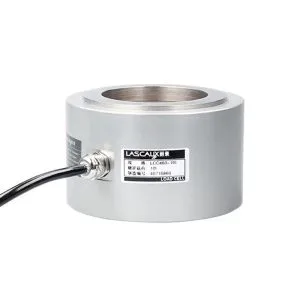
LCC460 Column Type Canister Annular Load Cell
What Is a Thru Hole Load Cell
A thru hole load cell has a center opening that allows bolts, shafts, or threaded rods to pass directly through the sensor body.
This type of sensor is well suited for compact machinery where direct force monitoring is required. Compression versions are typically used for axial force measurement in vertical equipment with continuous load monitoring requirements.
Typical advantages include:
- Compact installation
- Direct force transfer
- Easier mechanical integration
- Stable long-term measurement
Grain Processing Applications
Grain handling is one of the few food applications where conventional industrial load cells are often a practical fit.
Wheat, rice, corn, flour, oats, and cereal ingredients are typically handled in dry production environments, which are generally less restrictive than wet food processing areas.
Common applications include:
- Hopper weighing
- Ingredient batching
- Dispensing systems
- Filling and packaging equipment
The following examples show where a thru hole load cell is commonly used in grain processing equipment.
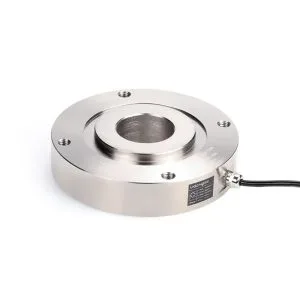
LCD820 Low Profile Disk Load Cell Force Transducer For Weighing System
Hopper Weighing and Ingredient Storage
Hoppers are widely used for grain storage, temporary holding, and controlled dispensing.
Accurate force measurement helps maintain:
- Stable material levels
- Better batching consistency
- Reduced product waste
- Improved process control
A thru hole load cell can be integrated into hopper support structures for direct compression measurement.
Common applications include flour storage systems, grain bins, cereal ingredient handling, and dry material feeding equipment.
Automated Batching Systems
Batch accuracy directly affects production consistency.
Small force measurement errors can lead to overfilling, incorrect recipes, unnecessary ingredient loss, or production downtime.
In vertical machine designs, a compression thru hole load cell is often used because the force path is direct and mechanically stable.
These systems are commonly found in:
- Bakery ingredient batching
- Dry powder dispensing
- Grain blending equipment
- Cereal production lines
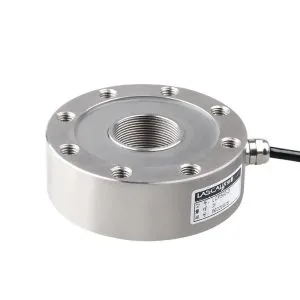
LCF560 Weighing and Control Pancake Load Cell
Filling and Packaging Equipment
Packaging machinery often presents tight installation constraints.
Applications include rice bag filling, flour packaging, oatmeal production, and dry ingredient pouch filling.
These systems may require force monitoring for:
- Fill verification
- Compression force control
- Overload protection
- Structural monitoring
A compact thru hole load cell can simplify integration in these applications while maintaining stable performance.
OEM Thru Hole Load Cell Customization
Standard catalog products do not always match OEM equipment requirements.
Machine builders often need custom dimensions, mounting adjustments, or specific electrical outputs to fit existing machine designs.
An OEM thru hole load cell solution may include:
- Custom center-hole diameter
- Modified sensor dimensions
- Specific load capacities
- Cable length adjustments
- Connector options
- Analog or digital outputs
- Mounting adaptations
For OEM projects, customization can reduce redesign effort and shorten development time.
Choosing a Thru Hole Load Cell Manufacturer
Choosing the right thru hole load cell manufacturer matters as much as selecting the right sensor design.
Published specifications do not always reflect long-term performance in actual production environments.
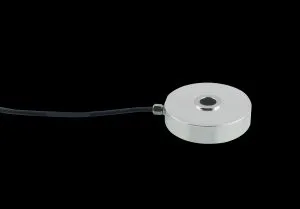
804 Low Profile Disk Load Cell load cell 2t force sensor
Environmental Protection
Grain dust can affect sensor performance if sealing is inadequate.
Choose an appropriate IP protection level based on operating conditions, especially in equipment exposed to continuous dust or vibration.
Measurement Stability
For production equipment, repeatability is often more important than theoretical peak accuracy.
Important specifications include:
- Repeatability
- Hysteresis
- Non-linearity
- Creep
- Overload protection
Material Construction
Stainless steel construction is often preferred for grain processing equipment because it improves durability and simplifies cleaning.
Engineering Support
Experienced thru hole load cell manufacturers should provide more than standard catalog products.
OEM equipment projects may require:
- Application guidance
- Capacity selection support
- Mechanical integration review
- Prototype customization
- Long-term supply planning
Strong engineering support becomes especially important when sensor performance directly affects machine uptime.
Final Thoughts
For grain processing applications, a thru hole load cell offers a practical combination of compact design, stable compression measurement, and straightforward OEM integration.
Whether used in hopper weighing, batching, or packaging systems, the right sensor design helps improve process consistency and equipment reliability.
For custom projects, working with experienced thru hole load cell manufacturers can make integration significantly easier.