
In large-scale flour processing and noodle making, consistency starts even before the mixer runs. Flour feeding accuracy matters. It affects dough moisture absorption. It also impacts mixing stability and product uniformity. Even a tiny change in flour dosing can lead to big differences in how the dough performs.
In many traditional plants, operators control flour feeding using two main methods. One method is the screw conveyor’s running time. The other is manual operator judgment. This method seems simple, but it assumes the powder discharge stays the same each cycle. Flour bulk density changes all the time. It can be affected by humidity, aeration, compaction, and how it’s stored. Timed conveying can release different amounts of flour with each batch.
This is one of the most common hidden causes of inconsistent dough quality in continuous noodle production.
More manufacturers are moving away from timer-based feeding. They are now using a gravimetric Automatic Flour Weighing System. The system measures real-time weight loss from the flour silo. This data controls the feeding process in real-time. It does this instead of just estimating discharge based on motor time.
At the center of this gravimetric control logic is one critical component: the Silo Load Cell.
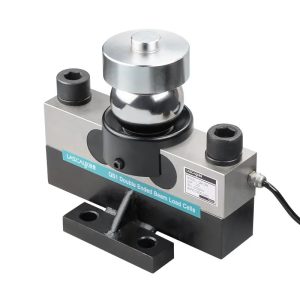
QS1 Double Shear Beam Load Cell for Truckand Rail Scales
Why Timer-Based Flour Feeding Often Fails in Continuous Production
A timer-controlled screw feeder can only calculate flour delivery based on a fixed assumption:
screw rotation time = expected powder discharge.
However, powder materials do not behave like liquid metering systems. Flour flow is highly sensitive to:
-
internal bridging,
-
moisture variation,
-
aeration condition,
-
screw filling ratio,
-
discharge compaction.
In actual flour plants, two identical screw running cycles may discharge different flour quantities even when motor speed remains unchanged.
This means a timed feeder cannot guarantee repeatable ingredient dosing.
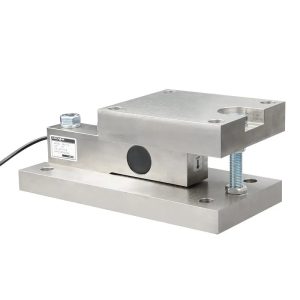
FW Cantilever Beam Weighing Module (0.5t–10t) for Suspended Hoppers
The problem becomes more obvious in automatic noodle lines where each batch must maintain stable water-to-flour ratio. If the flour quantity drifts by only a small percentage, the mixer receives a different ingredient balance, causing:
-
unstable dough texture,
-
inconsistent moisture absorption,
-
variable sheet forming behavior,
-
reduced downstream product consistency.
Many engineers discover that the mixer is often blamed for dough instability when the real fluctuation actually begins at the flour feeding stage.
This is why more powder handling systems are moving from volumetric estimation to gravimetric weighing control.
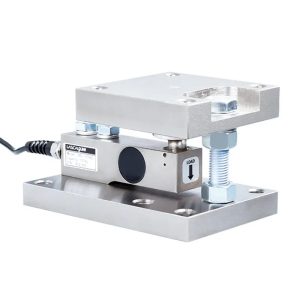
FWC Explosion-Proof Cantilever Beam Weighing Module
What a Silo Load Cell Actually Does in a Flour Weighing System
In a gravimetric flour dosing line, the storage silo is no longer just a passive flour container. It becomes an active weighing vessel that continuously reports how much material is being discharged.
This is achieved by installing calibrated Silo Load Cells under the silo support points so that the entire vessel is converted into one integrated weighing assembly.
As flour leaves the silo, the load cell network immediately detects the reduction in total vessel mass. The PLC then reads this real-time weight loss and calculates the exact quantity of flour that has been discharged into the feeding line.
Unlike level sensors or visual material height estimation, load-cell-based silo weighing measures true mass rather than approximate volume.
This distinction is extremely important in flour applications because powder density is never perfectly stable. Material height inside the silo may look unchanged while actual mass changes significantly due to compaction or aeration.
A properly engineered silo weighing assembly gives the plant continuous access to:
-
real-time flour inventory,
-
exact discharged flour quantity,
-
remaining refill capacity,
-
live powder feeding rate,
-
cumulative batching records.
In other words, the silo itself becomes the first weighing instrument in the automatic batching process.
This is the foundation of any reliable loss-in-weight feeding system.
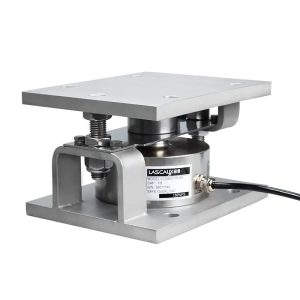
GL Batching Weighing Module for Hopper, Tank and Silo Systems
Why Shear Beam Load Cells Are Preferred for Flour Silo Support
Although the weighing principle sounds straightforward, industrial silo weighing is rarely a static vertical-load condition.
In real powder plants, the silo structure is constantly influenced by:
-
screw feeder vibration,
-
pneumatic pipeline pulling force,
-
uneven internal flour distribution,
-
support frame movement,
-
external mechanical disturbance.
Under these dynamic conditions, the weighing sensor must do much more than simply bear vertical compression.
This is why many industrial engineers prefer the Shear Beam Load Cell for medium-capacity flour silo applications.
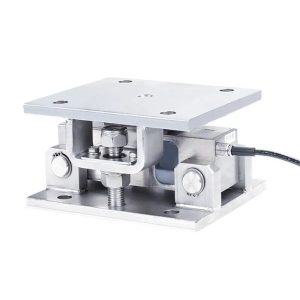
WM603 Stainless Steel Double Shear Beam Weigh Module for Tank Batching
Compared with ordinary compression-type sensors, a shear beam structure provides:
-
stronger resistance to eccentric loading,
-
better tolerance to side force,
-
higher signal repeatability under vibration,
-
more stable output during partial off-center discharge.
In actual installations, flour does not always discharge evenly from the center of the vessel. Material may shift to one side, screw startup may create sudden mechanical shock, and connected pipelines may introduce horizontal stress into the silo legs.
A general-purpose sensor often shows signal drift under these conditions.
A properly selected Shear Beam Load Cell is mechanically better suited to absorb these non-ideal loading changes while still maintaining a reliable electrical output.
For automatic flour batching, this stable weight signal is not a small technical detail—it directly determines whether the PLC can make an accurate feeding stop decision.
Without stable sensor feedback, fine dosing correction becomes impossible.
Why a Proper Weighing Module Matters More Than Many Plants Expect
One common mistake in silo weighing projects is assuming that a good load cell alone is enough to ensure weighing accuracy.
In reality, long-term measurement stability depends just as much on how the sensor is mechanically mounted.
In many flour factories, weighing drift is not caused by sensor failure. It is caused by:
-
steel frame thermal expansion,
-
horizontal structural pulling,
-
accidental side impact,
-
vessel rocking,
-
rigid installation interference.
When a load cell is mounted directly under a silo leg without any guided restraint, these unwanted forces transfer into the sensing element and gradually distort the weighing signal.
That is why professional silo weighing systems use a dedicated Weighing Module rather than a bare sensor installation.
A complete weighing module normally includes:
-
upper and lower mounting plates,
-
horizontal limiting devices,
-
anti-lift protection,
-
anti-overturn restraint,
-
shock buffering structure.
This modular mounting arrangement allows the load cell to sense only the true vertical vessel weight while minimizing side-force interference.
In actual long-term powder batching service, this makes a major difference in:
-
calibration retention,
-
signal repeatability,
-
maintenance frequency,
-
mechanical safety,
-
overall weighing life.
Engineers who have worked on bulk solids installations know that many “sensor accuracy problems” are actually installation structure problems.
This is exactly why the weighing module should be treated as part of the measurement system—not simply as a mounting accessory.