
As automation standards continue to rise in noodle production, manufacturers are paying closer attention to one weighing point that was often overlooked in the past — the day-use flour bin above the dough mixing system.
In many modern noodle plants, flour is no longer fed manually into mixers or transferred directly from outdoor storage silos without intermediate control. Instead, it is buffered in compact daily-use flour hoppers that provide several hours of continuous supply for each batching line. These hoppers do more than store material. They have gradually become a critical weighing node that directly affects flour dosing accuracy, dough consistency, and overall recipe stability.
This shift is changing how food equipment builders design hopper support systems.
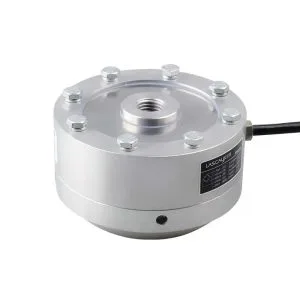
LCF500 Spoke-Type Pancake Load Cell for Truck & Hopper Scales
Among various sensor options, the Spoke Load Cell is increasingly being selected as a more stable weighing solution for these compact flour bins, especially in automated noodle, pasta, and dry food processing lines where continuous vibration and repetitive loading make conventional sensors less dependable.
The Day-Use Flour Bin Is No Longer Just a Storage Hopper
In a traditional noodle factory layout, the outdoor flour silo serves as the main storage point, but the actual production rhythm is controlled inside the workshop.
Before flour enters the mixer, it is typically transferred pneumatically or mechanically into one or more day-use hoppers positioned above the dough preparation line. These hoppers usually hold enough flour for several hours of uninterrupted operation, allowing production to continue even during temporary pauses in central conveying.
Depending on plant capacity, these intermediate flour bins commonly range from 1 ton to 10 tons, with 3-ton, 5-ton, and 8-ton configurations being the most widely used.
However, their importance today goes far beyond simple buffering.
Because every kilogram of flour discharged from this hopper directly enters the dough formulation, the bin has effectively become a real-time batching control point. Any inaccuracy at this stage can lead to unstable flour-water ratios, recipe deviation, and inconsistent noodle texture over long production shifts.
For this reason, more manufacturers now require continuous weight feedback rather than simple high-level or low-level material indication.
They need to know:
-
the exact amount of flour remaining inside the hopper,
-
the actual flour consumption for each mixing cycle,
-
whether refill timing matches planned production output,
-
and whether material arching, bridging, or abnormal discharge is occurring.
This growing demand is pushing daily flour bins from passive storage equipment into active weighing structures.
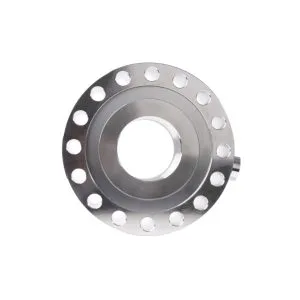
LCF550 Pancake Load Cell for Tension & Compression Test Applications
Why Traditional Beam-Type Sensors Are Becoming Less Ideal
At first glance, a small flour hopper may not appear to be a difficult weighing application. In reality, the mechanical conditions inside a noodle workshop are far more demanding than many expect.
During normal production, the hopper structure is continuously influenced by:
-
repeated pneumatic flour refilling,
-
screw conveyor discharge vibration,
-
rotary valve pulse impact,
-
machine frame resonance,
-
and occasional side force caused by flour arching or uneven material flow.
Under these conditions, ordinary beam-type or lighter shear sensors often experience signal fluctuation, reduced repeatability, and long-term zero drift. In some factories, frequent recalibration becomes a routine maintenance burden.
This is exactly where the mechanical advantage of the Spoke Load Cell becomes more apparent.
Why Spoke Load Cells Are Being Preferred in Flour Hopper Weighing
Unlike beam sensors that are more sensitive to lateral stress and off-center loading, a spoke load cell uses a central compression force path with a wheel-shaped elastic structure. This design distributes the hopper load more evenly through the sensor body and provides significantly better resistance to:
-
eccentric loading,
-
repeated vibration,
-
impact pulses,
-
and long-term structural fatigue.
When flour is pneumatically blown into the hopper in cycles or when discharge augers generate horizontal pulling force, the spoke-type compression sensor tends to maintain a more stable signal output than conventional lightweight load cells.
For noodle factories running double shifts or 24-hour production schedules, this translates directly into:
-
less manual recalibration,
-
more repeatable flour dosing,
-
fewer false shortage alarms,
-
and more dependable consumption data.
In practical terms, the benefit is not laboratory-level precision alone — it is process stability over thousands of repeated loading cycles.
That distinction matters far more in food manufacturing.
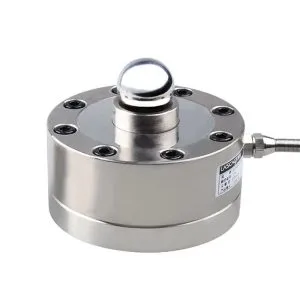 LCF510 Alloy Steel Pancake Force Sensor Durable High Accuracy
Compact Installation Makes Spoke Sensors Suitable Even for Small Bins
One outdated assumption in the weighing industry is that spoke load cells are only meant for truck scales, heavy silos, or large industrial tanks.
In fact, lower-capacity spoke models are now widely used in compact hopper structures because of another practical advantage: their low-profile compression installation design.
Day-use flour bins are usually mounted:
-
above mixers,
-
on mezzanine steel frames,
-
or inside enclosed hygienic flour rooms where vertical installation space is limited.
A spoke load cell can be directly integrated into three-leg or four-leg hopper supports without significantly increasing the total machine height, which makes structural design easier for OEM equipment manufacturers.
At the same time, the compression mounting method also simplifies long-term maintenance access compared with some suspended weighing structures.
Typical Spoke Load Cell Capacities Used in Noodle Plants
For small and medium flour hoppers, the most commonly selected spoke load cell capacities are:
-
500 kg
-
1 ton
-
2 ton
-
3 ton
-
5 ton
A 3-ton day-use flour hopper is often supported by three 1-ton or three 2-ton spoke load cells, depending on:
-
hopper dead weight,
-
frame safety factor,
-
and desired overload margin.
For a 5-ton hopper, machine builders may choose three or four 2-ton compression sensors to ensure better long-term fatigue resistance under continuous feeding vibration.
This highlights an important engineering principle:
load cell selection is based not only on stored flour weight, but on the total dynamic working stress the hopper experiences every day.
That is why many OEM designers are moving away from simply choosing the cheapest sensor that meets static capacity.
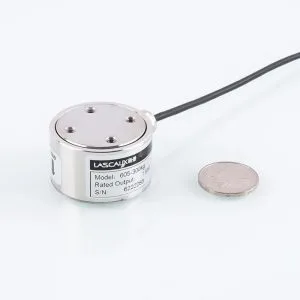
LCF605 Load Cell 100kg Pancake 500kg Spoke 1000kg Weighing Sensor
Automation Upgrades Are Accelerating This Change
The increasing use of spoke load cells is closely tied to the broader automation transformation now taking place across Asian noodle factories.
Manual flour dumping, visual level checking, and semi-automatic refill operations are gradually being replaced by:
-
central flour conveying systems,
-
PLC-based batching software,
-
automatic refill logic,
-
and digital production monitoring.
Inside these systems, the day-use flour hopper becomes a monitored weighing point connected directly to the plant control cabinet.
The load cell continuously transmits hopper weight to the PLC. When flour inventory drops below the preset threshold, the central conveying line automatically refills the bin. During dough preparation, flour discharge can also be recorded batch by batch to verify actual recipe consumption.
This creates several immediate production advantages:
-
more stable flour dosing,
-
lower operator involvement,
-
reduced empty-bin interruption,
-
digital material consumption records,
-
and more consistent dough hydration performance.
In this context, the weighing sensor is no longer just a supporting hardware component.
It becomes part of the factory’s process control data chain.
And once the weighing point becomes data-critical, equipment builders naturally favor a more durable and vibration-resistant sensor platform.
Hygienic Reliability Matters in Flour Rooms
Food factories impose stricter environmental demands than ordinary industrial plants.
Flour dust is highly adhesive, airborne humidity is common, and regular cleaning air pulses can gradually affect exposed sensor components. For this reason, sealed stainless steel or nickel-plated spoke load cells offer an additional reliability advantage.
Their enclosed compression structure provides:
-
better dust resistance,
-
stronger environmental sealing,
-
and more stable long-term zero return under repetitive loading.
For maintenance teams, this simply means fewer sensor interventions and less downtime spent checking empty-bin calibration.
And in continuous noodle production, uptime often matters more than theoretical sensor precision.
A Small Weighing Point That Is Becoming a Standard Design Choice
The use of spoke load cells in day-use flour bins is still a relatively specialized segment compared with large silo weighing, yet demand is rising steadily.
The strongest demand is now coming from OEM manufacturers building:
-
automatic flour feeding systems,
-
dough batching lines,
-
powder conveying equipment,
-
and integrated noodle processing machinery.
These builders are looking for a weighing sensor that can survive constant vibration, moderate compression load, and round-the-clock operation without turning into a calibration problem after installation.
That requirement is exactly where the spoke load cell is proving its value.
As noodle manufacturers continue to invest in recipe standardization, labor reduction, and automated batching, the weighing point above the mixer is receiving much more engineering attention than before.
And in this once-overlooked section of the production line, the Spoke Load Cell is no longer considered oversized heavy-industry hardware.
It is increasingly becoming the more dependable standard choice.