
Weighing in snack food packaging may appear straightforward. In practice, however, it is often one of the most challenging stages of production.
Unlike rigid industrial components, snack products are lightweight, fragile, irregular in shape, and constantly shifting during operation. Potato chips break and stack unevenly, nuts roll unpredictably, gummies cluster together, and puffed snacks may move with airflow or machine vibration.
These product characteristics make accurate weighing more difficult. Even small inconsistencies can lead to overweight packages, underfilled bags, reduced production efficiency, and unnecessary material waste. For this reason, sensor performance affects weighing accuracy and overall machine efficiency.
A properly selected single point load cell provides a reliable weighing solution for many snack packaging applications.
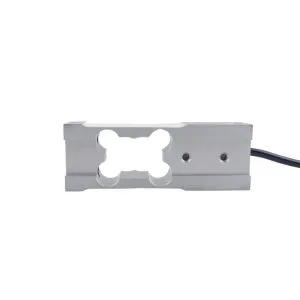
LC1245 Aluminum Alloy Single Point Load Cell for Packaging Scale
Managing Off-Center Loading in Snack Packaging Systems
One of the most common weighing challenges in snack packaging equipment is off-center loading.
In an ideal setup, product would always land evenly in the center of the weighing platform, creating uniform load distribution. In actual production, this rarely happens.
Snack products do not fall in predictable patterns. Almonds may collect on one side, broken crackers may stack unevenly, and lightweight chips may drift due to airflow inside the machine. As a result, the weighing system must handle uneven load distribution without compromising measurement accuracy.
A single point load cell is particularly suitable for this application. It maintains measurement accuracy even when the load is applied off-center, as long as the load remains within the intended platform dimensions.
Instead of relying on ideal product placement, manufacturers can build a weighing system that performs consistently under actual operating conditions.
Managing Machine Vibration and Signal Instability
Snack packaging equipment rarely operates in a completely stable environment.
A snack bag packaging scale typically operates alongside sealing systems, feeders, conveyors, and filling equipment that generate constant vibration. Vertical packaging machines create repeated jaw movement, product feeders operate in continuous cycles, and falling product can introduce impact forces throughout the machine structure.
These mechanical disturbances can interfere with weighing accuracy.
When the weighing signal fluctuates excessively, the control system must wait longer before confirming a stable reading. This delay slows packaging speed and reduces overall line efficiency.
This is where sensor design becomes important.
A properly selected single point load cell helps improve weighing stability in compact platform applications. Because it is well suited for fast-response weighing in compact structures, it can help reduce system settling time after each weighing cycle.
For manufacturers seeking higher throughput without sacrificing accuracy, this can improve overall production efficiency.
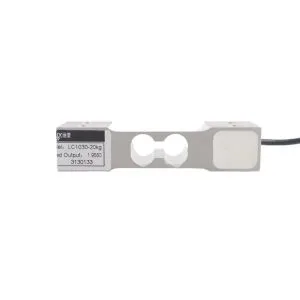
LC1030 High-Precision Single Point Load Cell For Package Scale
Reducing Product Giveaway and Protecting Profit Margins
One of the most costly hidden issues in snack packaging is product giveaway.
To avoid underweight packages, operators often intentionally overfill each bag. For example, if the target weight is 100 grams, the actual fill weight may be increased to 103 or 105 grams to reduce the risk of underweight non-compliance.
On an individual package, this may seem insignificant.
Across hundreds of thousands of packages, however, the material loss becomes substantial.
Even a small amount of excess product per package can lead to significant raw material waste over time.
The underlying cause is often inconsistent weighing performance. When operators cannot rely on repeatable measurement results, they tend to choose a conservative approach and overfill.
A stable snack bag packaging scale with accurate load sensing allows tighter control over fill tolerances. Improved repeatability helps reduce unnecessary overcompensation while maintaining compliance requirements.
This improves profitability without requiring any changes to the product itself.
Simplifying Mechanical Design and Saving Space
Modern packaging equipment is expected to be compact, efficient, and easy to maintain.
OEM manufacturers are under constant pressure to reduce machine footprint while increasing functionality. Complex weighing assemblies with multiple sensors often introduce unnecessary design complexity.
Additional sensors typically mean:
-
More brackets
-
More alignment work
-
More wiring
-
More calibration effort
-
More maintenance points
All of this increases engineering complexity.
A single point load cell helps simplify the weighing structure.
Because one sensor can support the weighing platform while compensating for off-center loading, the overall mechanical design becomes cleaner and easier to integrate.
For snack bag packaging equipment, this creates greater design flexibility, simplifies assembly, and helps reduce manufacturing costs.
In competitive equipment markets, simpler mechanical design often creates a practical commercial advantage.
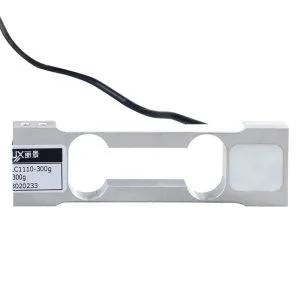
LC1110 Aluminum Alloy Single Point Load Cell For Package Scale
Handling Product Impact During Fast Filling Cycles
Not all weighing loads are static.
In snack packaging applications, product is often dropped into the weighing area at speed. Even lightweight products can generate significant temporary forces when falling from a certain height.
Repeated impact can create several challenges:
-
Sensor fatigue
-
Signal instability
-
Reduced accuracy
-
Premature mechanical wear
Because the actual product weight appears relatively low, this issue is sometimes underestimated.
However, dynamic loading behaves very differently from static load conditions.
A properly selected single point load cell with suitable overload capacity can better withstand repeated impact during fast filling cycles. This helps improve long-term reliability, particularly in continuous production environments where equipment may operate for extended periods.
In high-cycle snack packaging applications, durability is just as important as measurement accuracy.
Supporting Hygienic Food Production Environments
Food processing equipment faces stricter environmental requirements than many general industrial applications.
A snack bag packaging scale may need to operate in environments with:
-
Fine product dust
-
Salt particles
-
Oil residue
-
Flavoring powder
-
Frequent washdown or cleaning procedures
Poorly protected weighing components can fail quickly under these conditions.
Moisture intrusion, contamination buildup, and corrosion can all reduce equipment life and increase maintenance requirements.
Environmental protection should be considered a core design requirement, not an afterthought.
A properly specified single point load cell with suitable sealing and corrosion-resistant construction helps maintain stable performance in demanding food production environments.
For snack manufacturers, reliable operation under real cleaning and production conditions matters just as much as technical specifications.
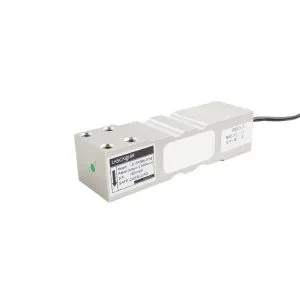
LC1545BS Single Point Load Cell for Package Scale
Making Maintenance Faster and Less Complicated
Downtime is expensive.
When a packaging line stops unexpectedly, production schedules are disrupted, labor efficiency declines, and delivery commitments become more difficult to meet.
Complex weighing systems can make troubleshooting slower and more difficult.
With multi-sensor designs, technicians may need to inspect:
-
Signal imbalance
-
Mechanical binding
-
Wiring inconsistencies
-
Calibration mismatch
-
Load distribution errors
This process takes time.
A simpler weighing structure reduces troubleshooting complexity.
A snack bag packaging scale built around a straightforward sensor arrangement is easier to inspect, service, and restore to operation.
Maintenance teams benefit from faster diagnosis, while production managers benefit from reduced downtime.
In busy manufacturing environments, that practical advantage matters.
Adapting to Different Snack Products
Snack production is rarely limited to a single product type.
A single production line may handle:
-
Potato chips
-
Mixed nuts
-
Hard candy
-
Gummies
-
Crackers
-
Puffed corn snacks
-
Granola clusters
Each product behaves differently.
Some products flow smoothly, others bounce unpredictably, and some are fragile enough to break during handling.
The weighing system must adapt to these differences.
A flexible sensor solution helps equipment manufacturers support multiple applications without redesigning the entire weighing structure for each product.
Because of its versatility in compact weighing platforms, the same general sensor approach can often be applied across multiple snack bag packaging scale configurations.
This flexibility improves design efficiency for OEMs and operational flexibility for end users.
Why This Sensor Choice Makes Practical Sense
The most effective engineering solutions are not always the most complex.
In snack packaging, real-world success depends on solving practical operational challenges, including:
-
Unpredictable product movement
-
Machine vibration
-
Off-center loading
-
Product giveaway
-
Limited installation space
-
Hygiene requirements
-
Maintenance downtime
-
Fast production cycles
A single point load cell helps address these challenges with a balanced and cost-effective approach.
It combines the characteristics manufacturers actually need: measurement accuracy, structural simplicity, adaptability, and durability.
For many snack bag packaging scale applications, this makes it one of the most practical sensor choices available.
The goal is not theoretical perfection under ideal laboratory conditions.
The goal is stable weighing performance in fast-moving production environments where products behave unpredictably and every gram matters.
That is where the right weighing technology proves its value.