

A 2% weighing error on a 50-ton grain silo means 1 ton of unaccounted inventory — every single batch. This guide walks you through load cell types, selection criteria, and installation best practices for precise bulk grain measurement.
Why Accurate Silo Weighing Matters for Your Farm or Feed Mill
When you’re managing bulk grain inventory — whether wheat, corn, soybean, or animal feed — weighing precision directly affects your bottom line. A grain bin weight monitoring system that drifts by even 1–2% can silently erode profitability across every load received or dispatched.
Quick example: A 50-ton silo with a 2% weighing error creates a 1-ton discrepancy per batch. If you cycle that silo 3 times per week, you’re potentially misreporting over 150 tons of grain per year — enough to trigger compliance issues and significant financial losses.
Inventory management and shrinkage control
Inaccurate bulk grain inventory weighing leads to “phantom shrinkage” — inventory losses that appear on paper but have no physical cause. Without a reliable silo weighing system, it’s nearly impossible to distinguish genuine spoilage or theft from measurement error. Real-time weight data allows farm managers to track grain in and grain out with confidence, and flag discrepancies immediately rather than discovering them at annual audit.
Feed formula precision for mills and integrators
For feed mills and poultry or swine integrators, accurate ingredient dosing is directly tied to animal performance and feed cost. A corn silo that reads 200 kg more than its actual contents causes systematic over-reporting in batch recipes. Over weeks of production, this adds up to wasted formulation effort and nutritional inconsistencies that are difficult to trace back to their source. A properly calibrated agricultural weighing load cell system eliminates this variable.
Regulatory compliance and record-keeping
In the United States, Brazil (MAPA), and EU member states, grain handlers and feed producers face traceability and audit requirements that demand documented, verifiable weight records. A certified silo weighing system — typically built on OIML or NTEP-approved load cells — provides the legal metrology foundation these records require. Without it, inspections can result in fines or loss of operating licenses.
3 Types of Load Cells Used in Silo Weighing
Not every load cell for grain silo applications is the same. The geometry of your silo, its capacity, and whether it’s a floor-mounted or suspended structure determine which load cell type is the right fit. Here are the three most commonly used configurations in tank and silo weighing solutions:
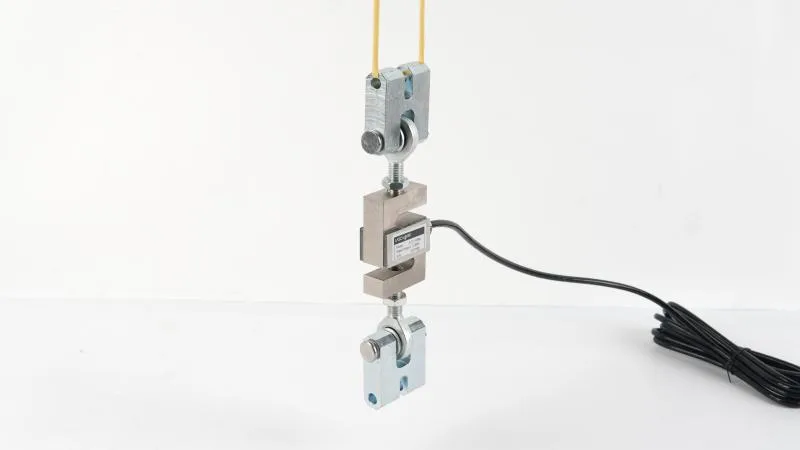
101M S-Type Load Cell
Introduction: A tension-based agricultural weighing load cell designed for suspended systems. It measures force through tension, making it suitable for hanging silos and hoisting applications where vertical load is transferred through suspension points.
Best for: Suspended silos, hanging hoppers, lifting and hoisting weighing, typically 0.1-5t
Mounting: Installed inline with suspension rods, chains, or cables
Accuracy class: C3
Typical IP rating: IP65
Material options: Alloy steel
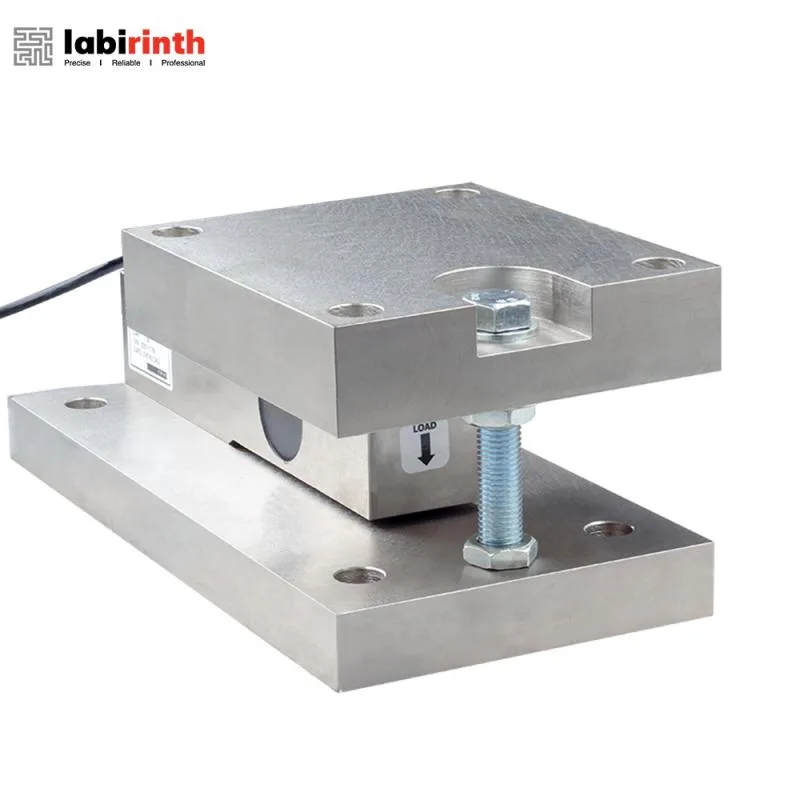
FW Cantilever Beam Weighing Module
Introduction: A compact silo weighing system module using a cantilever beam structure. Designed for easy installation and stable performance, it integrates mounting hardware with the load cell, reducing installation errors and improving long-term reliability.
Best for: Suspended hoppers, small to mid-size silos,
Mounting: Side-mounted or support-mounted with integrated weighing module kit
Accuracy class: C3
Typical IP rating: IP67
Material options: Alloy steel
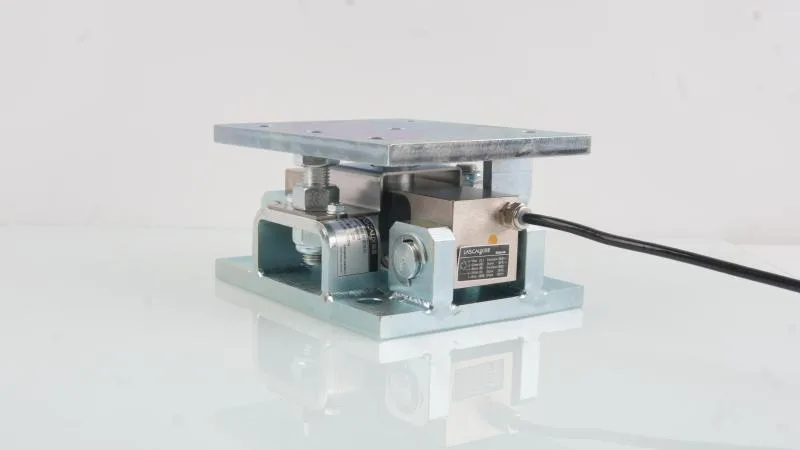
WM603 Stainless Steel Double Shear Beam Weigh Module
Introduction: A high-capacity grain silo weighing load cell module using double shear beam technology. Known for excellent resistance to side loads and harsh environments, it is ideal for demanding bulk grain inventory weighing applications.
Best for: Medium to large silos, tank and silo weighing solutions, batching systems,
Mounting: Installed under each silo leg with a complete weighing module assembly
Accuracy class: C3 / C4
Typical IP rating: IP68
Material options: Stainless steel
Quick selection rule: If your silo or hopper is suspended or hanging from a structure, choose the 101M S-Type Load Cell for reliable tension measurement. For small to mid-size silos or suspended hoppers within , the FW Cantilever Beam Weighing Module offers a compact, easy-to-install solution. For larger silos, tank systems, or high-capacity bulk grain inventory weighing (typically above ), use the WM603 Stainless Steel Double Shear Beam Weigh Module for maximum stability and environmental resistance. When in doubt, confirm the load distribution at each support point and include a safety margin before selecting capacity.
Key Factors to Consider When Choosing a Silo Weighing Load Cell
Selecting the right farm silo weight sensor goes beyond simply matching rated capacity. Four criteria make the difference between a system that performs for 15 years and one that drifts, fails, or requires constant recalibration.
Accuracy class: C3 vs C4 — is the price difference worth it?
OIML R60 defines accuracy classes by the number of verification intervals (nmax). A C3 load cell supports up to 3,000 intervals; C4 supports up to 10,000. In practical grain storage terms:
| Class | nmax | Typical accuracy | Suitable use case | Cost premium |
|---|---|---|---|---|
| C3 | 3,000 | ±0.05–0.1% FS | On-farm grain storage, large-batch reception | Baseline |
| C4 | 10,000 | ±0.02% FS | Feed mills, certified trade weighing, regulatory compliance | +20–35% |
For most on-farm grain storage weighing systems, C3 is sufficient. Feed mills selling finished product by weight — where measurements have commercial or regulatory weight — should specify C4.
Environmental protection: IP67 or IP68 for outdoor silos?
Grain dust, cleaning washdowns, and outdoor weather create harsh environments for electronic sensors. The IP (Ingress Protection) rating tells you how well the sensor resists solids and liquids:
IP67 means temporary immersion (1 meter, 30 minutes). IP68 means continuous immersion at rated depth. For outdoor grain silos in regions with heavy rain, flooding risk, or regular high-pressure washdowns — such as coastal Brazil or the US Midwest — IP68 is strongly recommended. IP67 is acceptable for covered or climate-controlled indoor installations.
Material: stainless steel vs alloy steel in grain dust environments
Alloy steel load cells are the cost-effective default for most silo applications. However, grain dust, particularly in the presence of moisture, promotes corrosion in unprotected alloy steel. If your facility processes high-moisture grain, uses wet cleaning systems, or is located in a humid coastal climate (common in Brazil, Portugal, or the US Gulf Coast), specify stainless steel load cells. The cost premium is 15–25%, but service life can double in corrosive environments.
Installation Best Practices: 4 Common Mistakes That Cause Inaccurate Readings
Even the most precise load cell delivers poor results if installed incorrectly. Silo load cell installation errors are the leading cause of drift, zero instability, and premature sensor failure in grain facilities. Here are the four mistakes we see most often — and how to prevent them.
Uneven foundation or improper mounting
All load cell mounting surfaces must be level, coplanar, and rigid. If the silo’s support legs are not on the same plane, unequal side loading occurs — some cells bear more than their design share, skewing the summed reading and fatiguing the overloaded sensors. Always use a machinist’s level across all mounting pads before installation, and shim as needed. Use load cell mounting assemblies with integrated leveling feet rather than welding cells directly to pads.
Pipe connections causing binding (load constraint)
Rigid inlet/outlet piping attached directly to a weighed silo introduces parasitic forces — the pipe “holds” some of the vessel’s weight or imparts upward reaction loads when pressurized. This is one of the most common and most underestimated errors in silo weighing installations. All connected piping must use flexible compensators (bellows or flex hoses) directly adjacent to the vessel nozzle. The flexible section must be oriented to be load-neutral in the vertical direction.
Wind load on tall outdoor silos
Tall cylindrical silos act as sails. Wind-induced bending moments create alternating side loads on the support legs, which translates to oscillating weight readings and increased RMS noise in live weight data. For silos taller than 8 meters in exposed locations, install wind load baffles or use mounting hardware with integrated lateral restraint (such as check rods or load cell restraint brackets) that allow vertical movement but resist horizontal deflection.
Ignoring thermal expansion
Steel silos expand and contract with temperature — a 20-meter tall steel column changes length by approximately 4–5 mm across a 40°C temperature range. If the load cell mounting assembly doesn’t accommodate this thermal movement, the result is daily zero drift that correlates with ambient temperature. Use rocker pin or self-aligning load cell assemblies that allow small angular and horizontal displacements without transmitting horizontal force into the load cell axis.
Pro tip: After installation, always perform a loaded calibration test — fill the silo with a known weight of material and verify against the displayed reading. A static zero check alone is insufficient; many binding and piping constraint errors only appear under load.
Frequently Asked Questions
How many load cells do I need per silo?
The industry standard for most cylindrical grain silos is 3 or 4 load cells, positioned equidistantly under the support legs or support ring. Three cells create a statically determined system (no load redistribution uncertainty), while four cells provide redundancy and are preferred for larger, heavier silos. For rectangular flat-bottom bins, 4 cells at the corners is standard. Never use 2 cells — a two-point system cannot balance lateral loads and produces unreliable results. On very large silos with 6+ support legs, install one cell per support point.
Can I retrofit load cells to an existing silo?
Yes — retrofitting is one of the most common requests in agricultural weighing, and it’s entirely feasible for most silo types. The process involves temporarily relieving the load on each support leg (using hydraulic jacks or screw jacks), inserting the load cell and mounting assembly between the leg and the foundation pad, and lowering the vessel back onto the cells. Critical considerations for retrofit: the foundation must be assessed for load-bearing adequacy; the leg clearance must be sufficient to insert mounting hardware; and all piping constraints must be addressed at the same time. Budget for 1–2 days of downtime per silo for a professional installation.
How often should silo load cells be recalibrated?
For non-trade grain storage (on-farm inventory management), an annual recalibration check is generally sufficient. For trade weighing and regulatory-compliant applications (feed mills selling by weight, grain elevators, export facilities), calibration must follow the legal metrology requirements of your jurisdiction — typically every 1–2 years, with certified calibration weights. In practice, a good maintenance protocol includes: a zero check after every season-end cleanout, a loaded verification test after any mechanical work on the vessel or mounting, and a formal calibration when readings deviate more than 0.1% from a known reference. Environmental factors such as lightning strikes, floods, or heavy mechanical impact should trigger an immediate recalibration check.
What's the difference between a silo weighing system and a level sensor?
Level sensors (ultrasonic, radar, capacitive) measure the height of grain in the silo and estimate volume. Load cell-based silo weighing systems measure actual mass. For grain inventory management, weight is almost always the right measurement: grain density varies significantly with moisture content, variety, and compaction — so a volume reading converted to weight produces large errors. A silo that “looks 80% full” by radar could hold anywhere from 30 to 45 tons depending on grain condition. Load cells give you a direct mass measurement regardless of material density, making them the industry standard for both inventory control and trade applications.
What signal output do silo load cells use — analog or digital?
Most agricultural and industrial silo load cells output an analog millivolt-per-volt signal (typically 2 mV/V or 3 mV/V), which connects to a weight indicator, junction box, or PLC via a summing card. Digital output options (CANbus, Profibus, Modbus, EtherNet/IP) are available in higher-end models and are growing in popularity for integration with farm management software (FMS) and SCADA systems. If you’re planning to connect your grain bin weight monitoring system to ERP software or precision agriculture platforms, specify digital output load cells at the time of purchase — retrofitting digital capability later is considerably more expensive.